

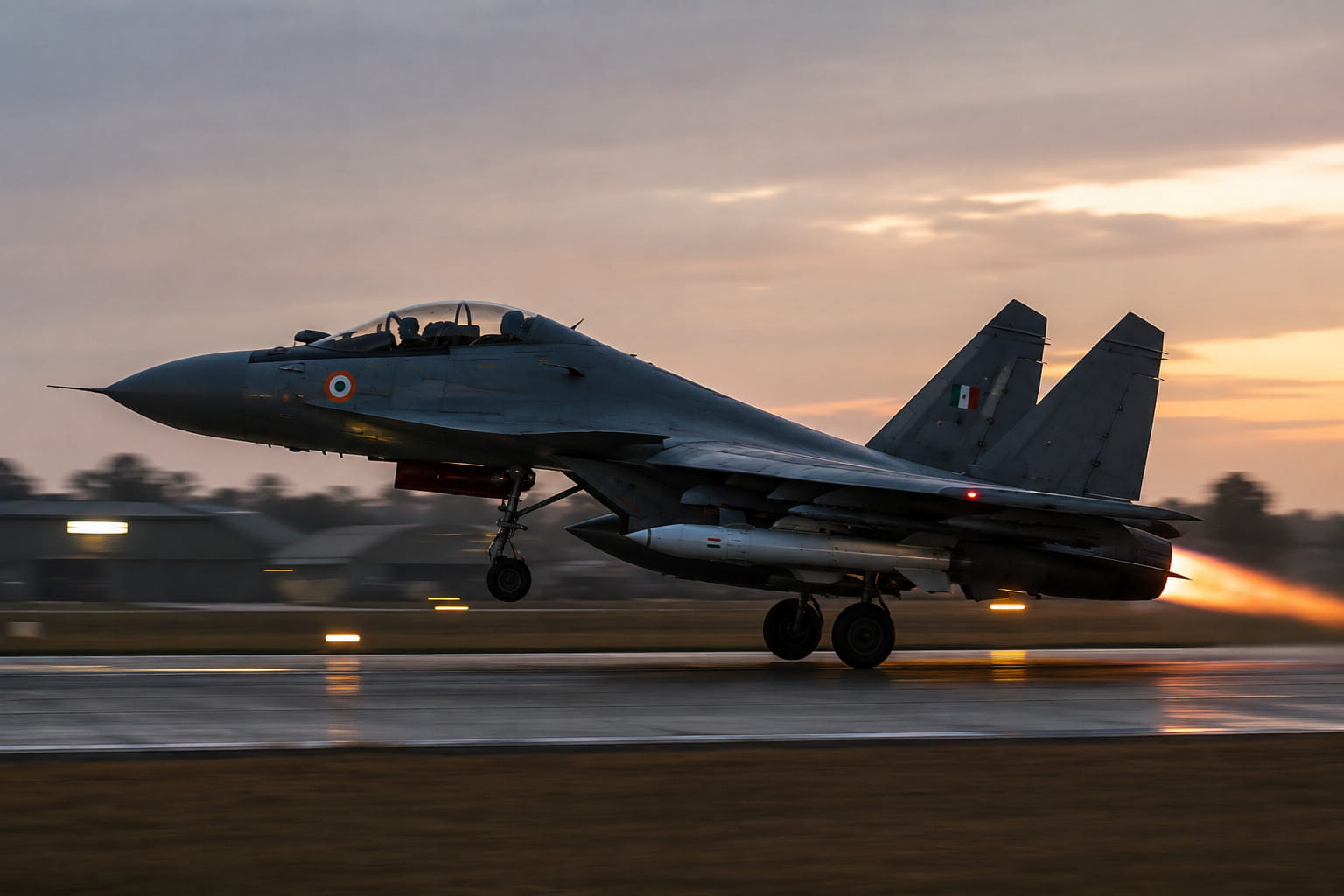
India’s successful RudraM-II missile test is not only a defence achievement. It is also a reminder of how national capability is built through public institutions, scientific research, armed forces testing, industry participation and years of patient development.
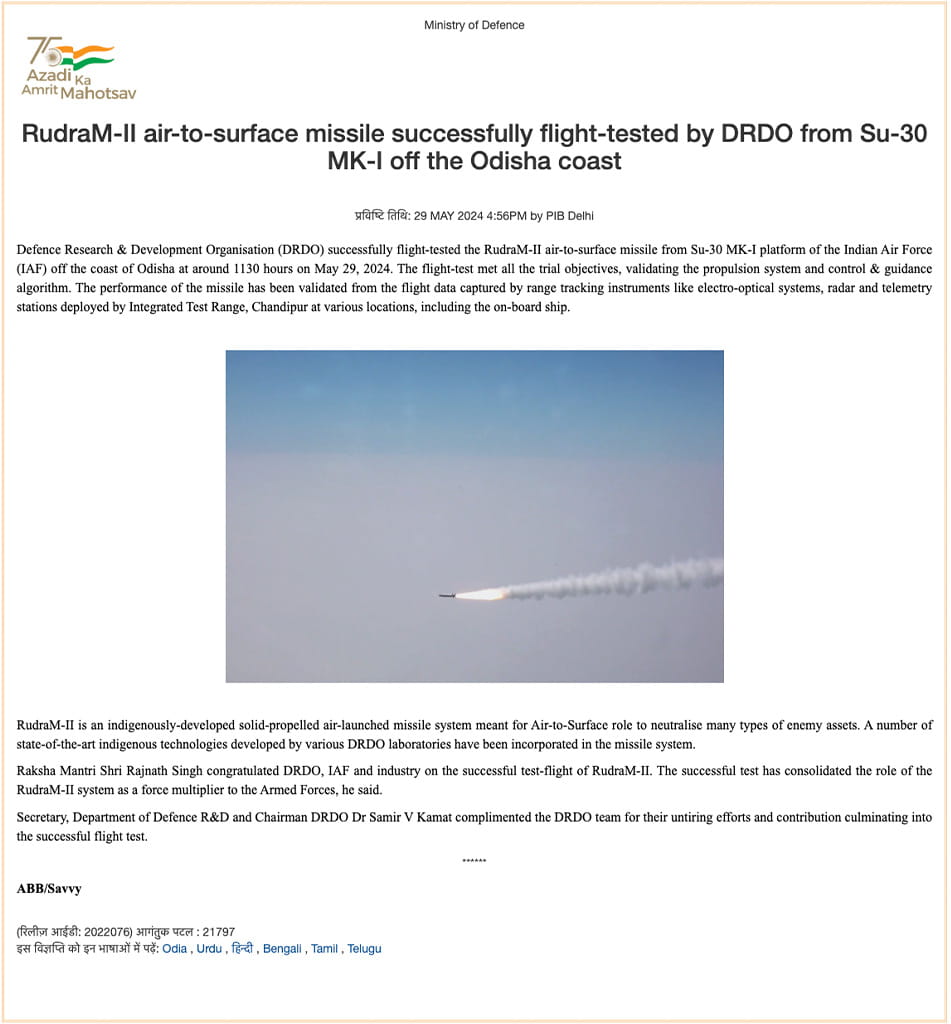
According to the official Ministry of Defence release, the Defence Research and Development Organisation and the Indian Air Force conducted successful flight-tests of the RudraM-II Air-to-Surface Missile from an airborne platform. The tests were conducted under extreme release conditions, and the missile was guided to a predefined target with pinpoint accuracy. The official release also confirmed that all test objectives were fully met.
For many readers, this may look like one more missile test. But for a country trying to strengthen indigenous defence technology, this is a larger story. It shows that India’s defence research ecosystem is slowly becoming more confident in advanced missile systems, precision weapons and air-launched capability.
Why RudraM-II matters beyond the missile headline?
RudraM-II is an indigenous air-to-surface missile. That means it is designed to be launched from an aircraft to strike a surface target. Such systems are important because modern air operations depend not only on fighter aircraft, but also on the quality of weapons they carry.
A fighter jet becomes far more capable when it is supported by accurate, reliable and mission-ready weapons. This is where indigenous missile development becomes important for India.
When DRDO develops such a system with the Indian Air Force and industry partners, the benefit is not limited to one missile. It also creates knowledge, testing experience, production capability and future design confidence within the country.
The government system behind a missile test
A successful missile test is never the work of one team alone. It involves scientists, engineers, test pilots, range safety teams, data specialists, defence laboratories, manufacturing partners and the user service.
In this case, the Integrated Test Range at Chandipur also played an important role by capturing flight data through range instruments. This data helps confirm whether the missile followed the required path, whether its subsystems performed correctly and whether the test objectives were achieved.
This is why such updates matter for a government employee and public institution audience also. Defence capability is not built only on the battlefield. It is built inside laboratories, workshops, test ranges, public sector systems, private industry units and long-term government-backed research programmes.
Why indigenous defence technology is important for India?
India has been working to reduce dependence on foreign defence systems. Imported platforms and weapons can be useful, but a major country cannot depend forever on outside suppliers for every critical capability.
Indigenous defence technology gives India three important advantages.
First, it improves strategic independence.
Second, it builds domestic technical skill.
Third, it strengthens India’s defence manufacturing ecosystem.
The RudraM-II test fits into this wider direction. It shows progress in guided weapons, air-launched systems and precision strike capability. These are areas where long-term investment is necessary because advanced defence systems cannot be created overnight.
What the test confirms and what it does not confirm?
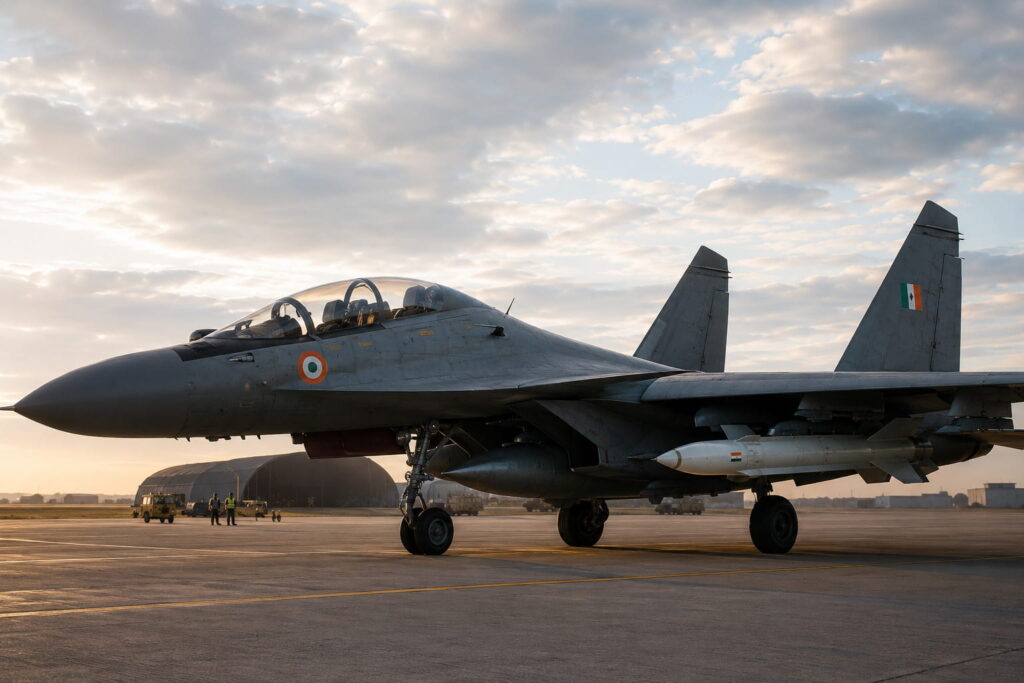
The official update confirms that DRDO and the Indian Air Force successfully conducted flight-tests of RudraM-II from an airborne platform. It also confirms extreme release conditions, pinpoint accuracy and full achievement of test objectives.
However, a successful test should not be confused with immediate large-scale induction. Defence systems normally pass through several rounds of testing, validation, user evaluation and integration before they become part of regular operational inventory.
So the correct reading is balanced. RudraM-II has achieved an important milestone, but future official announcements will clarify the next stages.
Why this update should be watched closely?
For India, the RudraM-II test is important because it shows movement in a field that directly affects national security. A country’s defence strength depends on soldiers, air warriors and sailors, but it also depends on the systems placed in their hands.
This test is a reminder that the quality of public research, government planning, defence production and user-service coordination can directly shape India’s future military capability.
In that sense, RudraM-II is not only a missile story. It is a story of institutional effort. It reflects how DRDO, the Indian Air Force, industry partners and test-range teams are working together to build a stronger indigenous defence base.
Final takeaway
The RudraM-II missile test should be seen as a serious step in India’s journey toward self-reliant defence capability. It strengthens the discussion around indigenous missile technology, air-to-surface weapons, precision targeting and India’s defence research ecosystem.
For citizens, employees, pensioners and policy watchers, the message is simple: national capability is not built in a day. It is built through institutions that keep testing, correcting, improving and delivering. RudraM-II is one more sign that India’s defence technology base is moving in that direction.
Sources:-
DRDO & IAF conduct successful flight-tests of RudraM-II Air-to-Surface Missile
https://www.pib.gov.in/PressReleasePage.aspx?PRID=2268099
Alternative PIB detail page:
https://www.pib.gov.in/PressReleaseDetail.aspx?PRID=2268099&lang=1®=1
PIB Photo Gallery, RudraM-II test image
https://www.pib.gov.in/ShowAlbum.aspx?albumid=223291&lang=1®=3
PIB Year End Review 2024, mentions earlier RudraM-II flight-test on 29 May 2024
https://www.pib.gov.in/PressReleasePage.aspx?PRID=2088180&lang=2®=3
Economic Times, RudraM-II test from Su-30MKI
https://m.economictimes.com/news/defence/drdo-iaf-successfully-test-rudram-ii-air-to-surface-missile-from-su-30mki-fighter-hits-target-with-pin-point-accuracy/articleshow/131465756.cms
Times of India, RudraM-II successful flight-tests
https://timesofindia.indiatimes.com/defence/news/india-successfully-test-fires-rudram-2-all-about-the-anti-radiation-missile/articleshow/131465653.cms




Leave a Reply