

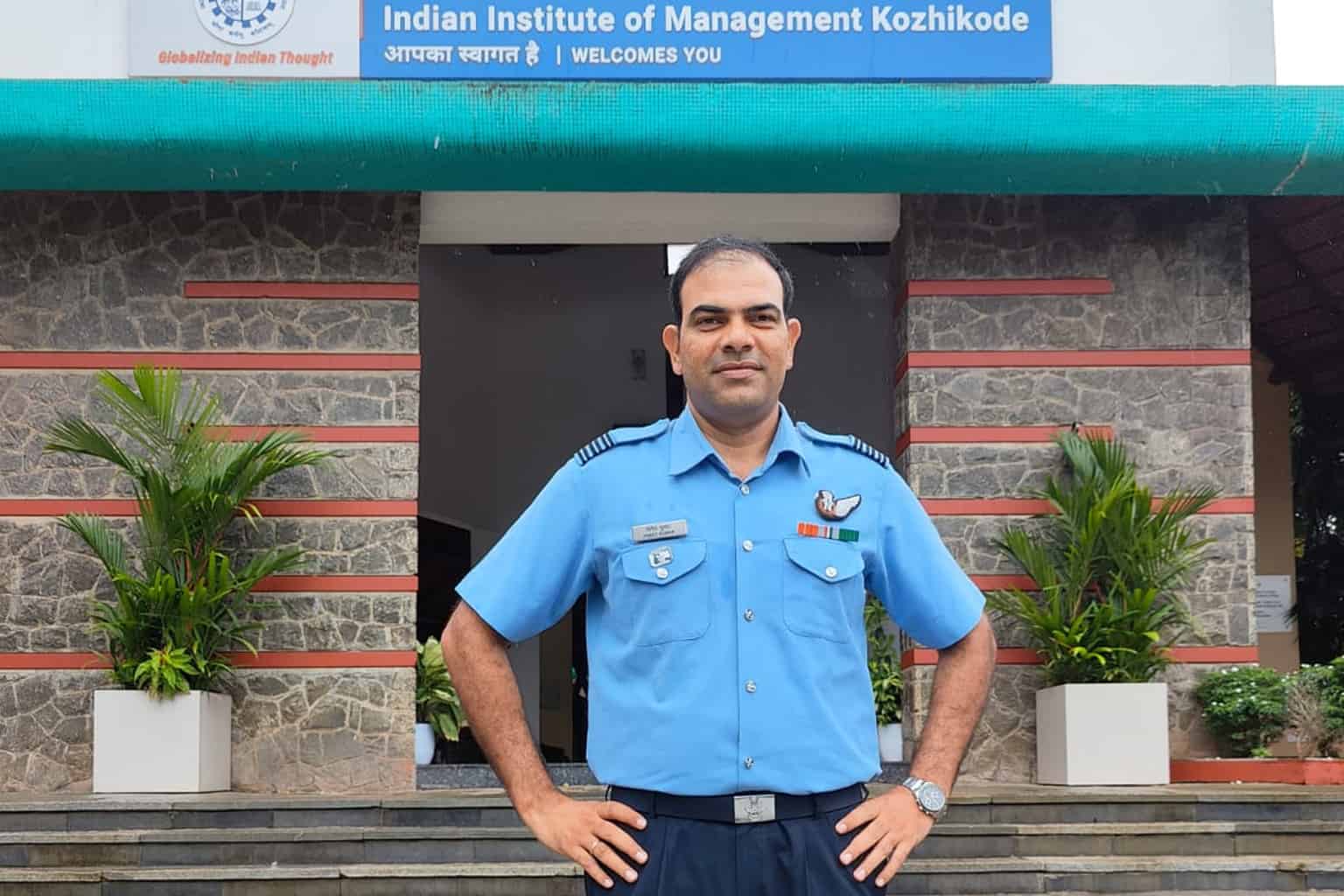
A uniform may be retired.
Discipline is not.
That is the real strength of a defence veteran entering civilian life.
For many serving personnel approaching retirement, the biggest question is not only “What job will I get?” The bigger question is: How do I convert my military experience into a clear civilian identity?
This question matters because the Armed Forces do not train a person only for one narrow task. They train him to think under pressure, lead people, manage limited resources, solve problems, coordinate with multiple agencies and deliver results when failure is not an option.
That is why veterans can build strong second careers after retirement — but only if they plan early, identify their real strengths and choose the right direction.
What the Armed Forces really teach?
Military service teaches far more than drill, discipline and uniformed duty.
A person in the Armed Forces learns how to work with teams, manage responsibility, follow systems, maintain integrity and take decisions with incomplete information.
In civilian language, this becomes:
operations management
crisis response
leadership under pressure
logistics planning
team supervision
risk assessment
resource optimisation
public coordination
emergency response
administrative discipline
These are not small skills.
These are exactly the skills many organisations need but cannot easily create through classroom training.
Why second career planning should start before retirement?
Many veterans face difficulty after retirement not because they lack ability, but because they enter the civilian market without a clear plan.
A common mistake is saying:
“I can do HR.”
“I can do admin.”
“I can do security.”
“I can do operations.”
“I can do anything.”
The problem is that the civilian market does not always understand “anything.”
It understands focused capability.
A veteran must decide what he wants to become after service.
Does he want to enter logistics?
Does he want to work in corporate operations?
Does he want to manage facilities?
Does he want to work in disaster management?
Does he want to train youth?
Does he want to enter aviation, security, supply chain, education, compliance or administration?
Does he want to start his own venture?
The answer should be clear before the last posting ends.
The military habit of solving problems
One of the strongest points from the veteran experience is this: the Armed Forces teach a person to find solutions where others may only see problems.
In military life, resources are often limited, timelines are tight and the expectation is high.
A task cannot be ignored because conditions are difficult.
A commander cannot say that work will not happen because manpower is short.
A team cannot stop because equipment is limited.
The job still has to be done.
This habit of delivery under pressure becomes a powerful civilian skill.
In corporate life, this can help in operations, project execution, vendor management, crisis handling, logistics, compliance and people management.
What disaster-relief operations teach?
Disaster-relief experience is one of the strongest examples of military capability that can translate into civilian life.
During floods, landslides, cyclones or rescue missions, the Armed Forces work with civil administration, police, local communities, medical teams and transport agencies.
This builds practical experience in:
rapid planning
air and ground coordination
relief material movement
evacuation
communication under stress
public handling
inter-agency cooperation
logistics under pressure
humanitarian response
The Kerala floods and Jammu & Kashmir flood-relief operations showed how military systems can respond when normal life breaks down.
For a veteran, such experience is not just a memory. It can become a professional strength in emergency management, logistics, infrastructure support, aviation coordination, transport planning, public safety and disaster response.
Why “jack of all trades” is not enough outside?
Inside the Armed Forces, a person may handle many responsibilities.
He may manage a mess, a canteen, transport, stores, personnel, operations, training, security and administration at different stages of service.
This versatility is valuable.
But outside, it must be translated properly.
A veteran should not enter the civilian market only as a “general manager of everything.”
He should identify the strongest civilian equivalent of his military experience.
For example:
A logistics officer can move towards supply chain and warehouse operations.
A technical officer can move towards maintenance, manufacturing, defence technology or quality control.
An air operations background can connect with aviation, operations control, emergency coordination or safety systems.
A training background can connect with education, skill development or leadership training.
A field administration background can connect with facility management, compliance or large-site operations.
A canteen or mess-management background can connect with retail operations, hospitality systems or institutional administration.
The skill is already there.
The language must be changed.

Why veterans should identify their strongest lane?
A veteran’s second career becomes stronger when he selects one professional lane.
That lane should match:
service experience
education
temperament
family requirement
health condition
location preference
financial expectation
civilian market demand
A person who has spent years in logistics should not ignore that experience only because someone said “security job is easier.”
A person who has managed teams under pressure should not underestimate his leadership value.
A person who has handled disaster response should not miss opportunities in emergency planning and public safety.
A person with technical background should not reduce himself to routine administration if he can build a technical career.
The key is self-assessment.
DGR’s role in veteran resettlement
The Directorate General Resettlement plays an important role in helping ex-servicemen transition after military life.
DGR works under the Department of Ex-Servicemen Welfare and facilitates resettlement through training, re-employment and self-employment support.
This matters because the second career should not depend only on informal contacts, WhatsApp forwards or random job agents.
Veterans should track official routes.
DGR’s official website provides information related to job assistance, training, schemes, work opportunities and registration.
For officers, JCOs and OR, the DGR route can help bring structure to post-retirement planning.
Why training and upskilling are important?
Military experience is strong, but civilian roles may require additional certification, sector language or updated technical knowledge.
This is where training matters.
A veteran may have excellent leadership experience, but he may still need to learn civilian HR systems, corporate software, compliance formats, safety certification, logistics platforms or project-management tools.
Upskilling does not reduce military experience.
It makes it usable in the civilian market.
A veteran should not see training as starting from zero.
He should see it as converting his existing strength into a recognised civilian format.
National Career Service and wider job search
The National Career Service is another government platform that can support career exploration.
It provides job search and career-related services and includes a specific route for jobs for ex-servicemen.
This can be useful because veterans should not depend on only one channel.
A practical approach is to combine:
DGR registration
DGR job assistance
DGR training
National Career Service
personal network
LinkedIn profile
industry-specific applications
skill certification
resume preparation
A second career is not built by waiting.
It is built by preparing.
What veterans should do before retirement?
A serving person approaching retirement should begin preparation early.
Ideally, the process should begin at least one to two years before release.
The preparation should include:
identifying preferred industry
mapping military experience to civilian roles
updating educational documents
creating a civilian-style resume
registering with DGR where applicable
checking DGR training options
using National Career Service
building a LinkedIn profile
speaking with veterans already in the field
learning basic corporate language
understanding salary expectations
preparing for interviews
The earlier this starts, the smoother the transition becomes.
Why companies should understand veterans better?
Many companies do not fully understand what veterans bring.
They may see only “defence background” and think of security roles.
That is a mistake.
Veterans can contribute in many areas:
operations
logistics
risk management
administration
training
facility management
aviation operations
emergency response
corporate security
compliance
project execution
supply chain
manufacturing support
public coordination
Companies should look beyond rank and uniform.
They should ask what problems the veteran has solved.
That is where the real value lies.
What young defence aspirants should also learn?
This topic is not only for retiring personnel.
Young people thinking of joining the Armed Forces should also understand it.
Military service can give a person unmatched exposure.
It can develop confidence, discipline, courage, adaptability and decision-making.
A good military career can also create the base for a strong second career later.
But the person must be willing to learn, serve sincerely and plan intelligently when the time comes.
The uniform gives opportunity.
The individual must convert that opportunity into lifelong value.
What should not be misunderstood?
This article does not mean that every veteran will automatically succeed in civilian life.
Military experience is powerful, but it must be presented correctly.
DGR does not guarantee a job.
National Career Service does not guarantee employment.
Training does not guarantee selection.
A veteran’s second career depends on eligibility, preparation, industry fit, communication, documentation, vacancy availability and interview performance.
The right message is this:
Military service creates strong capability, but second-career success requires focused planning.
The biggest mistake after retirement
The biggest mistake is waiting for retirement and then asking, “What should I do now?”
That question should be asked much earlier.
A veteran should leave service with a direction, not confusion.
He should know whether he wants employment, entrepreneurship, training, consulting, social work, adventure sports, education, logistics, corporate operations or government-linked opportunities.
A person who has served under pressure should not enter civilian life without a plan.
The discipline of service should continue into transition.
Comment
The Armed Forces make a person capable.
But capability alone is not enough.
A veteran must learn how to describe that capability to the civilian world.
The civilian world may not understand military appointments, unit responsibilities or operational language immediately. It understands outcomes.
How many people did you manage?
What resources did you handle?
What crisis did you solve?
What systems did you improve?
What logistics did you control?
What risks did you manage?
What teams did you lead?
When a veteran answers these questions clearly, his second career becomes stronger.
Final takeaway
A veteran’s second career should not be treated as an afterthought.
Military service builds discipline, leadership, crisis response, logistics, resource management, teamwork and decision-making under pressure.
These qualities have real value in civilian life.
But they must be converted into a focused career path.
DGR, National Career Service, training courses and official job-support systems can help, but the veteran must also prepare personally.
The message is simple:
do not wait until retirement,
identify your strongest skill,
choose your civilian direction,
train where needed,
register through official channels,
and enter the second career with confidence.
Uniformed service may end.
But the strength built by service can continue for life.
Sources:-
DGR — About Directorate General Resettlement:
https://www.desw.gov.in/about-dgr
DGR official website:
https://dgrindia.gov.in/
DGR Job Assistance page:
https://dgrindia.gov.in/Content1/job-assistance
DGR Training page:
https://dgrindia.gov.in/Content1/training
DGR Online Registration Process:
https://dgrindia.gov.in/Content2/registration/online-registration-process
National Career Service:
https://www.ncs.gov.in/
NCS Jobs for Ex-Servicemen:
https://www.ncs.gov.in/jobs-for-ex-servicemen
PIB — Air Force Rescue Operation during Kerala Floods:
https://www.pib.gov.in/PressReleaseIframePage.aspx?PRID=1562584
PIB — Indian Armed Forces in Humanitarian Assistance and Disaster Relief:
https://www.pib.gov.in/PressReleasePage.aspx?PRID=2228319
Indian Air Force — Disaster Management page:
https://indianairforce.nic.in/disaster_management


Leave a Reply