

When people talk about military modernisation, the discussion usually moves quickly toward equipment. Missiles, drones, rifles, radars, aircraft and surveillance systems dominate headlines because they look impressive and feel strategic. But a military does not become stronger only by buying advanced tools. It becomes stronger when the individual soldier is trained well enough to use those tools effectively under stress.
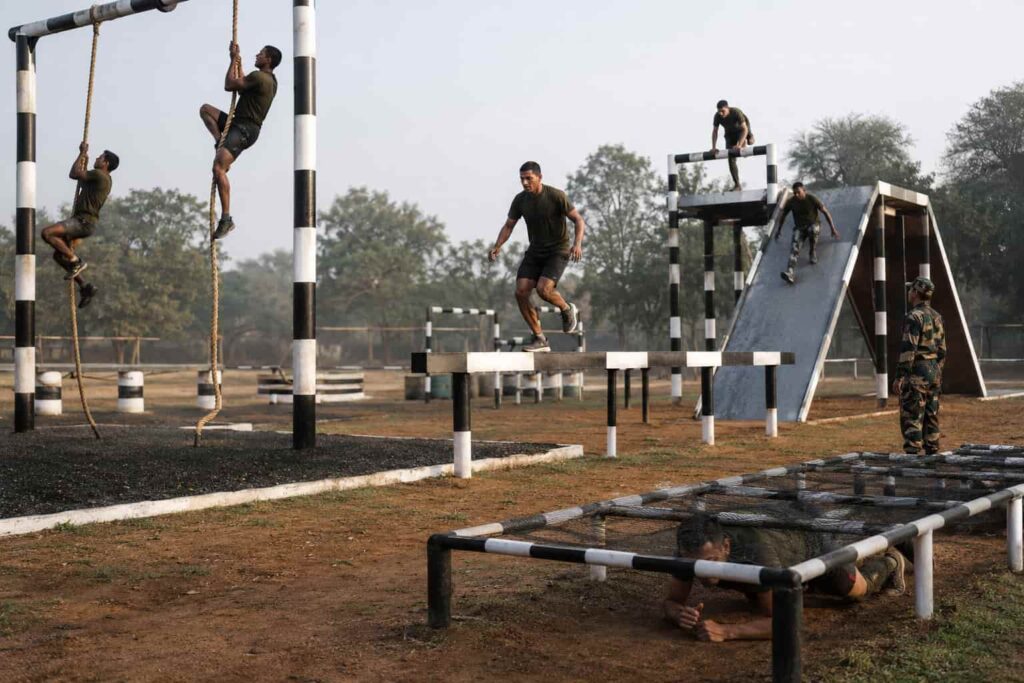
That is why the Army’s new all-weather synthetic obstacle course deserves serious attention.
At first glance, it may look like just another physical training facility. Ropes, ramps, walls, beams and climbing sections do not create the same excitement as a missile test or a big defence contract. But the value of this training space lies in what it represents. It shows that the Army is not treating physical conditioning as an old-fashioned leftover from a previous era. It is treating it as a core part of future readiness.
And that is the right approach.
Because the battlefield may change, but the soldier remains at the centre of it.
No matter how advanced the weapon system becomes, it still has to be carried, handled, protected and used by a human being. A soldier may have better equipment than ever before, but he still has to move across rough ground, react under fatigue, maintain control in poor conditions and make decisions when the body is under strain. Technology can improve capability, but it does not remove the need for stamina, balance, confidence and resilience.
In fact, in many ways, it makes those qualities even more important.
A modern soldier often carries more load than before. Protective gear, communication equipment, optics, ammunition, medical kits and mission-specific devices all add weight and complexity. The body has to work harder, not less. A soldier who lacks physical readiness will struggle to make full use of modern systems when the terrain becomes demanding or the situation becomes uncertain.
That is why an obstacle course like this matters beyond routine fitness.
It builds qualities that ordinary exercise alone cannot always develop in the same way. Running improves endurance. Strength work improves muscular capacity. But obstacle training does something broader. It brings together speed, coordination, balance, grip, timing, agility and mental control in one continuous experience. The soldier is not only using the body. He is using judgment under physical pressure.
That is exactly what real soldiering requires.
In the field, movement is rarely smooth or predictable. A soldier may have to climb quickly, land safely, crawl low, shift direction, cross barriers, keep momentum and recover from slips or fatigue without losing focus. Obstacle-based training creates a controlled way to practise these demands before they appear in real conditions. It prepares the soldier not only to be fit, but to remain effective when fitness is being tested.
The all-weather design makes this even more important.
Traditional obstacle courses are useful, but they can also lose consistency because of rain, mud, wear and surface damage. A synthetic course helps reduce those interruptions. It keeps the training cycle more regular and more dependable across different seasons. That does not mean it makes the work easier. It means it allows the Army to train more consistently, measure performance more clearly and keep the conditioning rhythm going without unnecessary disruption.
And in military training, consistency is everything.
A soldier is not built by occasional intensity alone. He is built through repetition. Through controlled difficulty. Through gradual increase in challenge. Through returning again and again until movement becomes instinctive and confidence replaces hesitation. If a training structure supports that process year-round, it becomes far more valuable than its appearance may suggest.
This is where the obstacle course becomes more than infrastructure.
It becomes part of a training philosophy.
The message behind it is simple but important: the Army wants soldiers who can keep functioning even when the environment becomes uncomfortable. Rain, darkness, slippery surfaces, uneven land and physical fatigue cannot become excuses in a profession where action may be needed at any hour and in any weather. A course that reflects this reality trains the soldier to expect hardship, not avoid it.
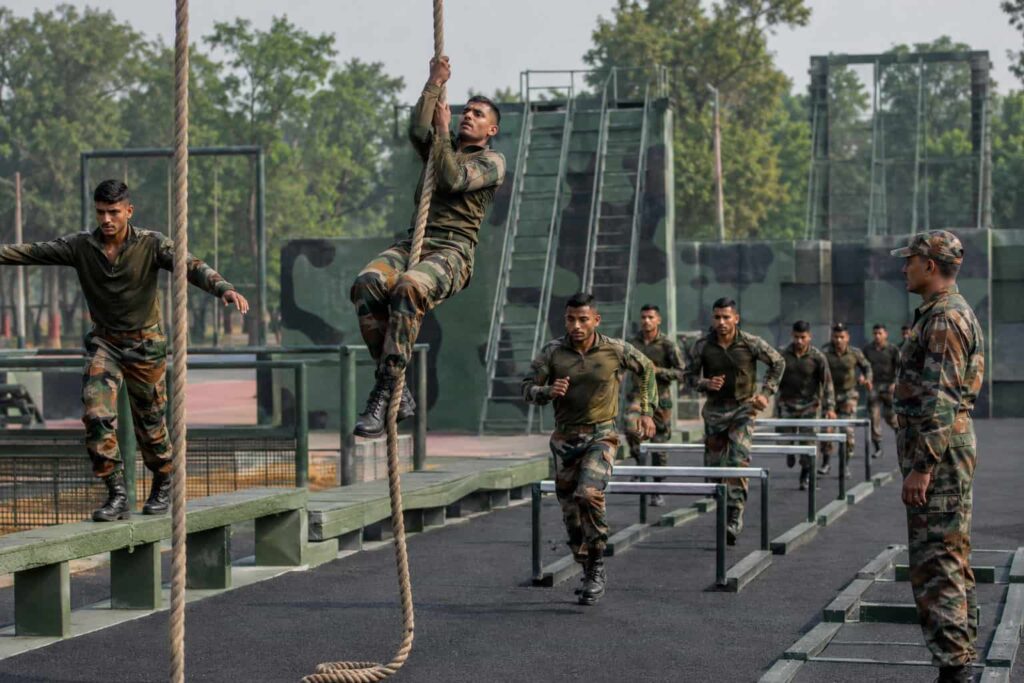
That expectation has real value.
Because one of the biggest differences between ordinary physical fitness and military fitness is adaptability. A person may be strong in a gym and still struggle in an unpredictable outdoor challenge. A soldier, by contrast, must be ready for movement, discomfort and uncertainty at the same time. Obstacle training brings those elements together in a practical and demanding way.
There is also a strong psychological side to this.
Every obstacle contains a small mental contest. A wall looks difficult until it is crossed. A rope feels intimidating until the body commits to the climb. A balance section creates doubt until control is found. These moments may seem small in isolation, but together they build something essential in military life: confidence under pressure.
That kind of confidence cannot be taught only in a classroom.
It has to be earned physically.
A soldier who has repeatedly forced himself through discomfort in training becomes less likely to freeze when a difficult moment arrives later. He learns that hesitation can be overcome, that fear can be managed and that the body can do more than the mind first assumes. This is one reason obstacle training remains so important even in an age of increasingly advanced warfare. It strengthens the human foundation beneath the equipment.
That foundation also supports teamwork.
Military obstacle training is rarely just an individual activity in spirit. Even when one soldier is crossing an obstacle alone, the wider culture around it is collective. Soldiers encourage each other, observe each other, compete with each other and often assist each other. Shared physical challenge creates mutual respect. It builds the trust that later becomes vital in field situations.
And trust is one of the strongest forms of combat strength.
A soldier who knows his team is physically dependable behaves differently. He moves with more confidence. He takes responsibility more seriously. He believes the group can absorb pressure together. Physical training that develops this bond strengthens the unit, not just the individual.
This is why the new obstacle course should not be seen as a cosmetic upgrade.
It is part of a larger understanding that combat readiness begins long before conflict. It begins in the daily grind of preparation. In the repetition that builds discipline. In the spaces where the body is pushed and the mind learns not to quit. A better training facility does not guarantee battlefield success by itself, but it improves the base from which that success becomes possible.
That is a national-security point worth understanding.
Countries often judge defence strength by the platforms they acquire. But readiness is also shaped by how seriously they prepare the soldier behind those platforms. A more advanced course may never become a dramatic public story, yet over time it may contribute more to combat effectiveness than many people realise. Because stronger armies are not created only by procurement. They are created by the quality of preparation before the crisis begins.
For young defence aspirants, this is an important lesson too.
The Army is not looking only for people who can pass a written test or speak well in an interview. It is looking for people who can stay steady when the body is under strain, who can continue when conditions are difficult and who can build the kind of confidence that comes only from hard physical work. Obstacle training is one of the clearest symbols of that standard.
In the end, the Army’s new obstacle course matters because it reflects a simple truth that modern defence discussions often forget. Weapons may become smarter, lighter, faster and more precise, but the final burden still rests on the soldier. If the soldier is fitter, more confident, more agile and more mentally ready, the force becomes stronger as a whole.
That is why this is not just a training-facility story.
It is a reminder that before any technology can make a difference, the soldier still has to be ready.






Leave a Reply