

ECHS beneficiaries who need medical equipment such as a CPAP, BiPAP, Oxygen Concentrator, wheelchair or other approved medical device for use at home now have a common processing procedure.
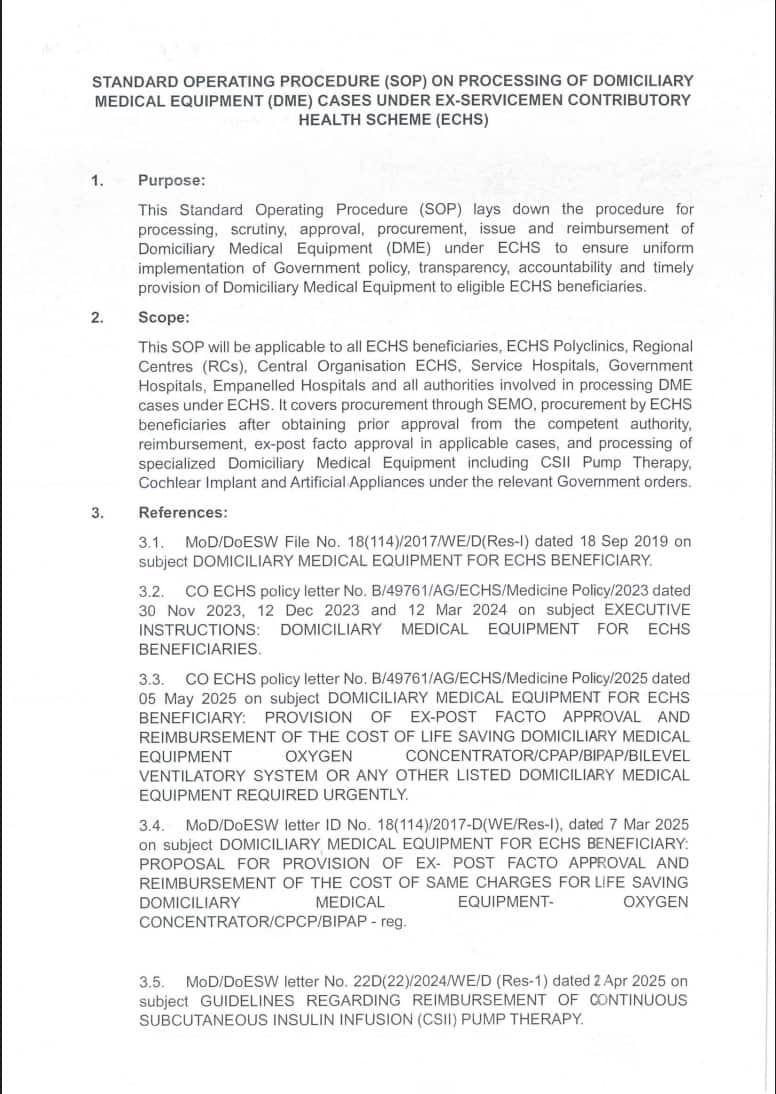
The Central Organisation ECHS issued an SOP dated 11 September 2026 for processing Domiciliary Medical Equipment cases.
The SOP explains how equipment can be approved, purchased, issued, reimbursed and replaced.
The most important point is simple:
Buying medical equipment from the market on your own does not automatically make it eligible for ECHS reimbursement. The prescribed approval process has to be followed.
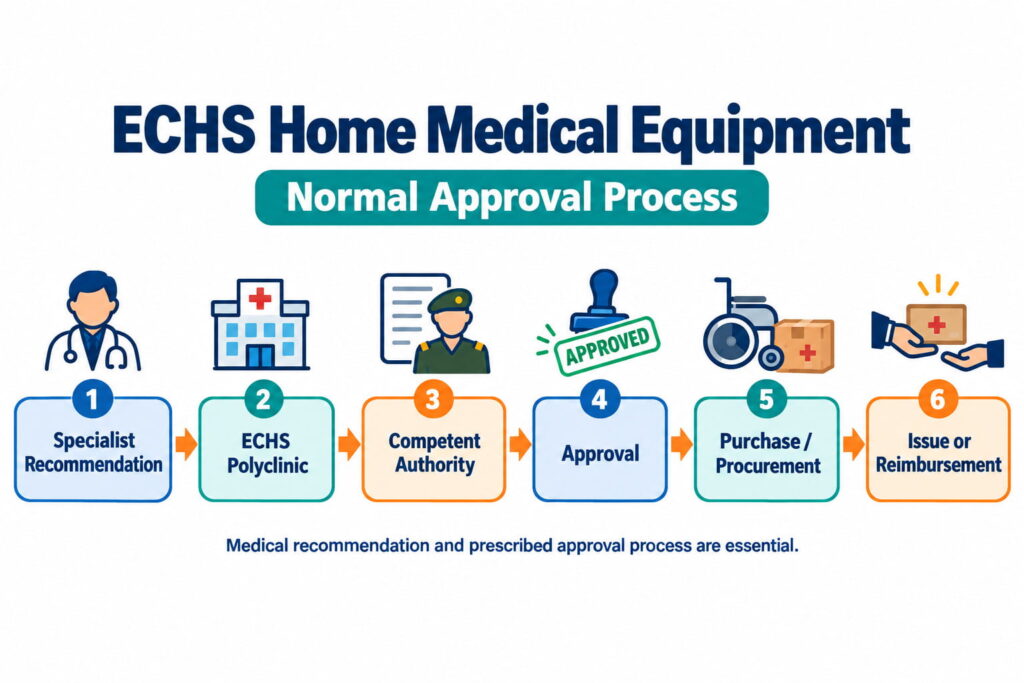
How does the normal approval process work?
The equipment must first be medically required and recommended by the concerned Specialist or Super Specialist of a Service Hospital or Government Hospital.
The normal process can broadly be understood as:
Specialist Recommendation → ECHS Polyclinic → Competent Authority → Approval → Purchase/Procurement → Issue or Reimbursement
The beneficiary may either receive the equipment through the prescribed ECHS procurement process or, where permitted, purchase it after obtaining prior approval and claim reimbursement.
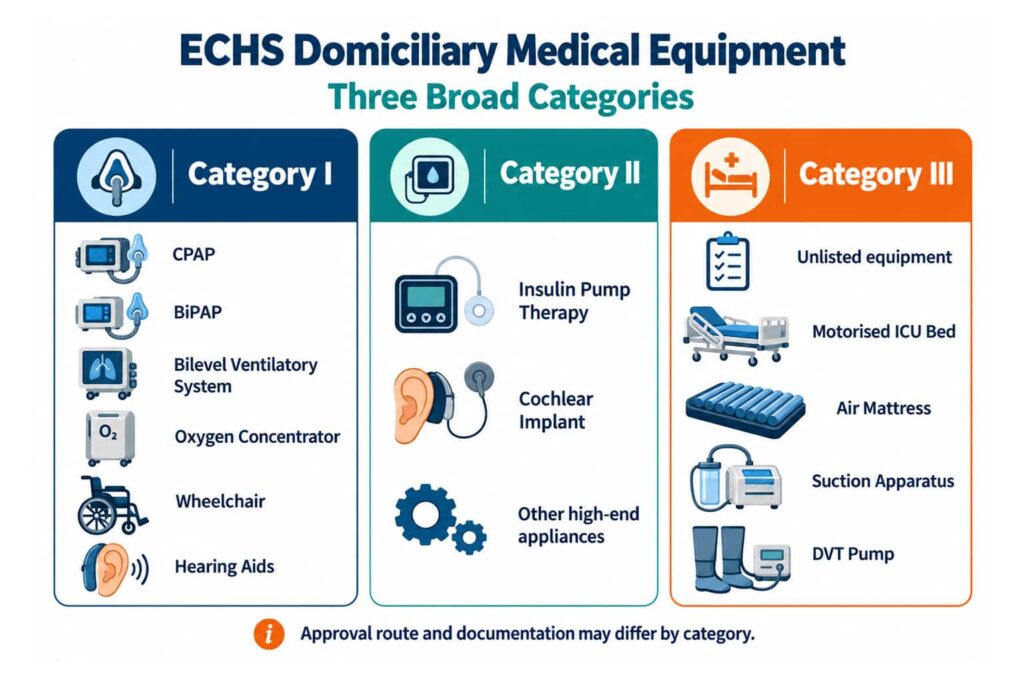
Which medical equipment is covered?
The SOP divides domiciliary medical equipment into three broad categories.
Who gives approval?
For Category I equipment, prior approval is generally processed through the Director, Regional Centre ECHS.
For Category II and Category III equipment, the case is processed through the prescribed higher authority, including the High Power Committee/Department of Ex-Servicemen Welfare, as applicable.
When are three quotations required?
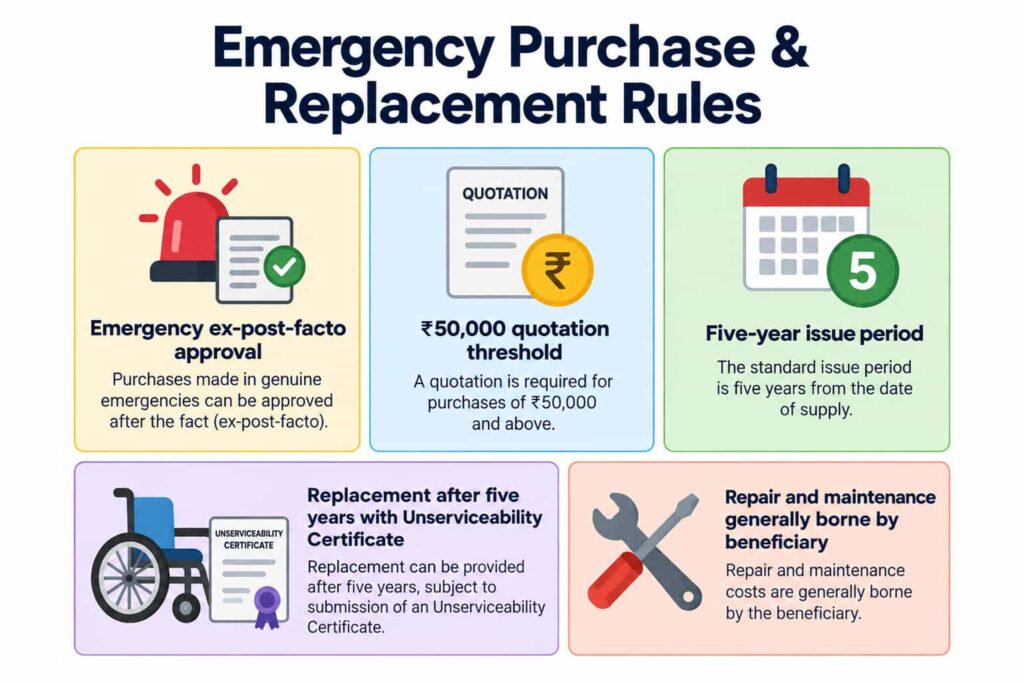
For Category II and Category III equipment costing more than ₹50,000, the SOP requires three quotations from authorised distributors.
For equipment costing up to ₹50,000, purchase may be processed without inviting quotations in the circumstances mentioned in the SOP.
This makes the ₹50,000 threshold an important point for beneficiaries handling specialised or unlisted equipment cases.
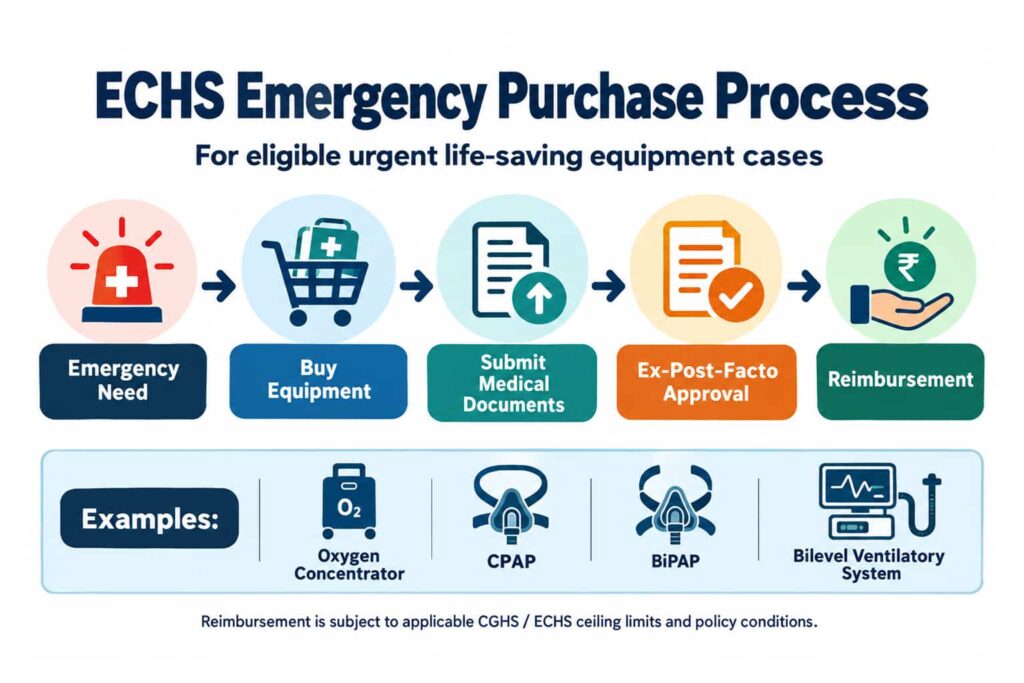
What if equipment is urgently required in an emergency?
The SOP provides a separate route where life-saving medical equipment is urgently required and prior approval cannot be obtained.
Examples mentioned include:
Oxygen Concentrator
CPAP
BiPAP
Bilevel Ventilatory System
In such eligible cases, the beneficiary may seek ex-post-facto approval after purchase.
Documents such as the doctor’s emergency justification, medical records, equipment recommendation, original invoice, payment receipt, warranty papers and ECHS Card are required.
Reimbursement is subject to the applicable CGHS/ECHS ceiling limit and policy conditions.
What documents are normally required for reimbursement?
Depending on the case, the beneficiary may have to submit:
Prior approval/sanction
Original equipment bill
Contingent bill
Bank details or cancelled cheque
ECHS Card copy
Medical recommendation
Warranty documents
Other supporting records required under the SOP
The Polyclinic also certifies that the same type of equipment for the same purpose was not issued during the previous five years, where applicable.
Who pays for repair and maintenance?
The SOP states that domiciliary medical equipment is generally issued for five years.
During this period, normal repair and maintenance expenses are the responsibility of the beneficiary and are not reimbursable.
If the equipment is still under warranty, the beneficiary can approach the concerned supplier/OEM as applicable.
When can equipment be replaced?
After five years, replacement may be processed depending on the condition of the equipment.
If the equipment becomes non-functional, an Unserviceability Certificate from an authorised service engineer of the Original Equipment Manufacturer may be required.
The replacement case is then processed under the prescribed procedure.
What should ECHS beneficiaries remember?
The 11 September 2026 SOP mainly creates a common process for home-use medical equipment cases.
The four most important points are:
Medical recommendation is compulsory.
Prior approval should normally be obtained before purchase.
Emergency purchase is allowed only in eligible cases and requires ex-post-facto approval.
Repair and maintenance during the five-year period are normally borne by the beneficiary.
Therefore, before buying an expensive medical device, an ECHS beneficiary should first check the applicable approval route with the concerned Polyclinic or Regional Centre.
Source
Central Organisation ECHS — Medical Section
Standard Operating Procedure on Processing of Domiciliary Medical Equipment Cases under ECHS — 11 September 2026

Leave a Reply